
Storing lengthy, thick, and heavy products can be difficult since standard warehouse shelving is not built to suit their size. Timber lengths, steel sections, metal pipes, plastic conduits, and building supplies frequently require a large amount of floor space, especially when stacked horizontally without a specific storage solution. Poor storage layouts can also make merchandise more difficult to obtain, increase handling time, and create unnecessary obstacles for warehouse operations.
The solution does not always include expanding the facility. A more practical approach is to rethink how available space is allocated. Businesses may accept big inventory while keeping their warehouse accessible and efficient by implementing proper storage methods, smart layouts, and the appropriate materials handling equipment.
Why conventional storage systems are not always suitable
Traditional shelving and standard pallet racking work well for many packaged and palletised goods. However, they can become inconvenient when storing items with unique lengths, irregular forms, or uneven weight distribution.
Long products may exceed the given shelf dimensions, and bulky items might take up valuable floor space if stacked in stacks. Retrieving goods from these arrangements may necessitate additional handling, raising the likelihood of product damage and workplace hazards.
These challenges make it important to choose storage equipment based on the dimensions, weight and handling requirements of the inventory rather than simply the available rack capacity.
Cantilever Racking: A Practical Solution for Oversized Materials
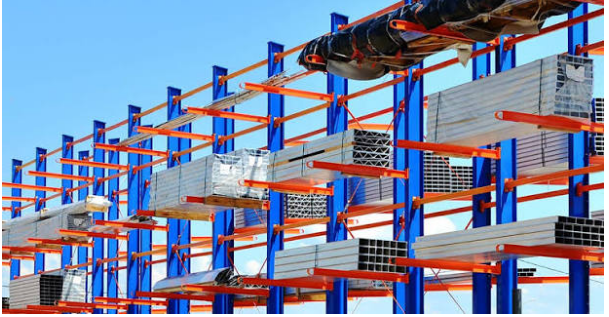
Cantilever racking is one of the most effective storage solutions for long and unevenly shaped products. Unlike conventional shelving, this arrangement employs vertical columns with horizontal arms to support objects without front facing vertical obstructions.
The open-front shape makes it ideal for storing items like timber, steel bars, pipes, aluminium pieces, and other long materials. Forklifts can quickly access these things, and warehouse personnel can manage stock across many storage levels.
Cantilever systems can be set up in either single or double-sided configurations. Single-sided units are handy when mounted against a wall, whereas double-sided arrangements allow storage access from both sides of the structure. The decision is based on warehouse dimensions, access needs, and the volume of materials being housed.
The arm length, spacing, column height, and load capacity should all be selected based on the products being handled. This ensures that materials are properly supported without putting additional strain on the structure.
Make Better Use of Vertical Warehouse Space
Warehouse floor space is expensive, and keeping everything on the ground level can quickly limit operating movement. Vertical storage allows you to enhance available capacity without extending the building footprint.
Multi-level racking enables businesses to organise appropriate inventory above floor level while keeping specified access locations clear. However, the system’s height must consider ceiling clearance, forklift lifting capacity, load dimensions, and safe retrieval.
For long materials, the placement of support arms is equally crucial. Products should be uniformly distributed throughout the designated supports to avoid instability or excessive loading at certain areas.
Combine Different Racking Systems Where Necessary
Not every warehousing product requires the same storage configuration. Businesses that handle big materials and palletised goods may profit from integrating specialist storage methods.
Cantilever racking may accommodate long products, whereas traditional pallet racking organises cartons, packed stock, and palletised goods. This method develops distinct storage zones based on product characteristics and handling needs.
When looking into pallet racking for sale, businesses should consider more than just the price. Rack size, load ratings, available accessories, installation requirements, and compatibility with existing forklifts all play a role in determining if a system is suitable for the warehouse.
Selecting equipment that corresponds to actual inventory requirements can assist prevent unneeded changes and inefficient space consumption.
Plan Warehouse Layout Around Material Movement
Even well-designed storage equipment might become ineffective when warehouse traffic is disorganised. Before installing new racking, consider the aisle width, forklift turning regions, loading zones, and selecting routes.
Materials that are often accessed should be placed in a location where they may be retrieved without affecting other warehouse operations. Secondary storage rooms can be used for less often used stock, as long as it is kept accessible and safe.
It is also worthwhile to do regular inventory reviews. Removing obsolete stock, consolidating similar products and assigning dedicated storage locations can free up valuable space without requiring additional infrastructure.
Prioritise Storage Safety and Load Requirements
Space optimisation should never be at the expense of workplace safety. Every racking system must be chosen and configured according on the dimensions, shape, and weight of the materials it will support.
Businesses should adhere to manufacturer specifications, observe rated load capacities, and ensure that racking is inspected and maintained properly. Any changes to the configuration should be reviewed by the original supplier or another qualified individual.
Clear load signs, appropriate forklift access, safety equipment, and proper employee training all contribute to safer warehouse operations.
Create a Warehouse That Works Smarter
Storing long, bulky and heavy materials efficiently require more than finding additional room. It entails selecting storage methods that are appropriate for the inventory, making efficient use of vertical space, and planning warehouse mobility around daily operational requirements.
Businesses can increase stock accessibility, minimise unnecessary floor congestion, and maximise the use of their current facilities by using appropriate cantilever and pallet racking arrangements. A well-planned warehouse promotes smoother handling, safer working conditions, and more productive operations.