

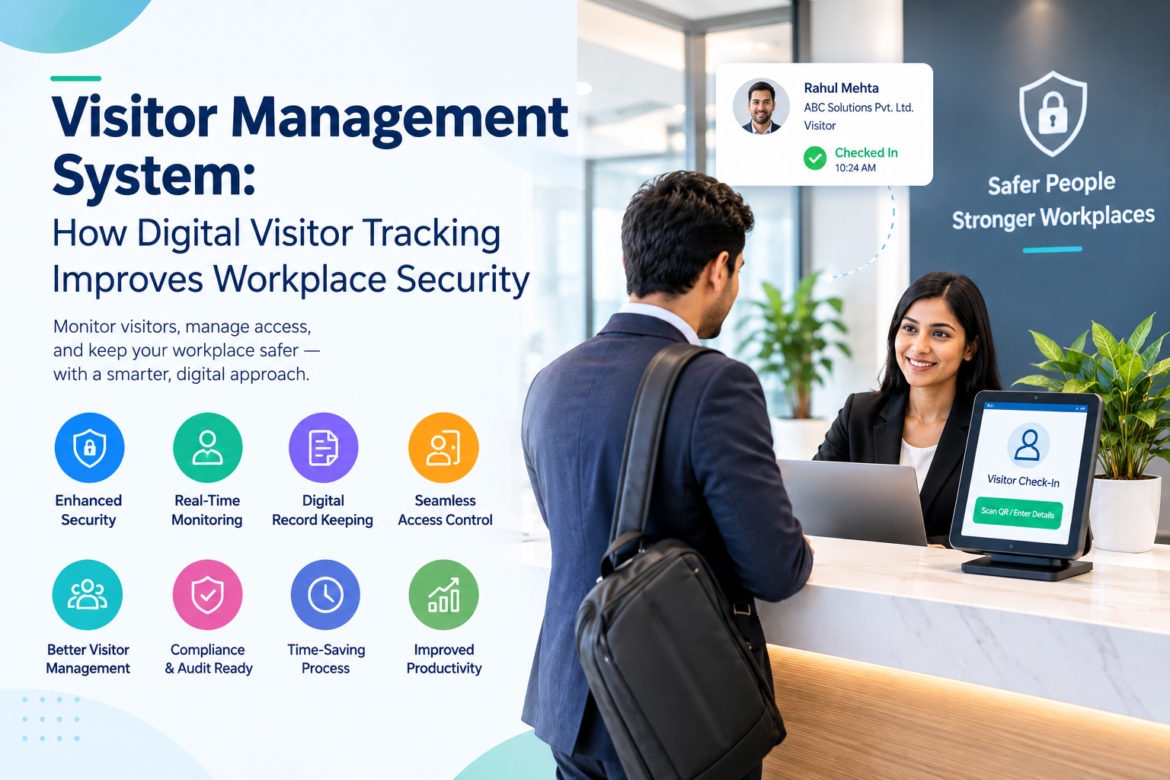
Security of workplace environments depends on effective visitor management systems that protect the facility. The daily visitor flow at offices, factories, corporate buildings, hospitals and other organizations includes clients, vendors, contractors, candidates and service providers. The process of recording visitor details by hand creates problems because it becomes hard to monitor visitor entry and exit from the property.
Teams might experience delays when they need to track visitor movements because traditional visitor logs only provide fundamental details. The process of searching through paper records requires extended time when staff members need to find urgent information.
A Visitor Management System provides a digital way to register, verify, monitor, and track visitors. By maintaining visitor information electronically and creating a structured check-in and check-out process, organizations can improve visibility over people entering and leaving their premises.
What is a Visitor Management System?
A Visitor Management System functions as a digital platform that tracks each person who enters and exits a workplace environment. The system maintains records about visitors which include their basic information, their reason for visiting, their designated host, their entry and exit times, their approval status and all other necessary details.
The traditional visitor registration process requires visitors to write down their information in a physical book which sits at the reception area or security desk. The security staff makes direct contact with the employee who requires their presence while they take charge of visitor admission through manual control. Businesses can handle visitor management through digital systems that operate as central platforms for their operations.
The system tracks visitor details through electronic storage, sends alerts to staff members and monitors visitor movement from their first step inside until they exit the building. The system operates through a defined operational framework which enables organizations to handle their visitor management requirements at workplaces.
How Does Visitor Management Software Work?
Visitor Management Software generally creates a digital process for managing visitors from the time they arrive until they leave the premises.
The exact process depends on the software and the organization’s security procedures, but a typical visitor tracking process can include:
Visitor Registration → Identity Verification → Host Notification → Approval → Check-In → Visitor Access → Check-Out → Digital Record
When a visitor arrives, their required details can be entered or verified through the system. The concerned employee can then be notified about the visitor.
After the visit is approved, the visitor can be checked in according to the organization’s access procedures. The system can record the entry time and maintain the visitor’s information.
When the visitor leaves, the security team can record the check-out. This creates a complete digital record of the visit.
For organizations looking for a digital solution to manage workplace visitors, Savvy HRMS provides a Visitor Management System that helps streamline visitor registration, tracking, check-in and check-out processes while giving organizations better visibility over visitor activity.
Why Is Visitor Tracking Important for Workplace Security?
Nowadays, businesses need to monitor every person who enters their facilities because they must track all visitors who enter their protected work areas.
Companies want to see their current visitors through manual visitor registers which do not provide instant access to visitor data. Traditional systems create difficulties for users to retrieve previous visitor information because they make the process more complicated.
Digital visitor tracking systems enable security and administration teams to establish a better-organized visitor activity tracking system. Staff members can evaluate the available data to determine which people entered the workplace, who their visitors were, and their arrival and departure times.
The system enables organizations to manage their visitor access better through its established verification system.
Workplaces that receive many visitors need to maintain precise visitor logs because they operate multiple departments and have restricted access areas and different facility locations.
How Does a Visitor Management System Improve Workplace Security?
A digital visitor management system can support workplace security in several ways.
1. Records Visitor Information
The system can maintain important visitor details digitally. Instead of relying on handwritten entries, organizations can keep structured records that are easier to access and review.
2. Supports Visitor Verification
Organizations can establish a visitor verification process before allowing access to the workplace. Required visitor details can be checked according to the organization’s security procedures.
3. Enables Host Approval
The system can notify the employee whom the visitor wants to meet. This allows organizations to include host confirmation or approval as part of the visitor entry process.
4. Tracks Check-In and Check-Out
Recording both entry and exit information helps maintain a clearer picture of visitor movement. Security teams can identify whether a visitor is still inside the premises based on available check-in and check-out records.
5. Helps Identify Current Visitors
A digital system can provide information about visitors who are currently checked in. This can be useful for security monitoring and emergencies.
6. Maintains Visitor History
Previous visitor records can be stored digitally, allowing authorized users to review visit information when required.
These capabilities help create a more controlled and traceable visitor process.
What Are the Key Security Features of Visitor Management Software?
The security-related features of Visitor Management Software can vary between platforms. However, organizations may look for features such as:
- Digital visitor registration: Records visitor information electronically.
- Visitor verification: Supports the organization’s visitor identification and verification process.
- Host notifications: Alerts the concerned employee when their visitor arrives.
- Visitor approval: Allows organizations to establish an approval step before visitor access.
- Digital check-in and check-out: Records visitor entry and exit times.
- Visitor badges: Helps identify visitors while they are inside the workplace.
- Pre-registration: Allows expected visitors to be registered before they arrive.
- Real-time visitor records: Provides information about visitors currently checked in.
- Visitor history: Maintains records of previous visits.
- Visitor reports: Provides information about visitor activity, timings, and visit frequency.
- Emergency visitor information: Helps organizations identify visitors recorded as being inside the premises during an emergency.
The combination of these features can help organizations maintain greater visibility over workplace visitor activity.
How Can Digital Visitor Tracking Help During Emergencies?
Visitor tracking systems activate during emergency situations because they help track people who must leave their current spaces during fire emergencies, evacuation procedures and other critical incidents.
The security team, along with administrative staff members who possess proper authorization, can access digital entry and exit records to determine which visitors entered the workplace.
The system indicates that visitors who checked in but failed to check out remain inside because it employs available records to track visitor movements.
Security teams, together with emergency response personnel, can track all people within the facility because this data set provides information about visitor numbers and employee attendance during emergency situations.
The system achieves its goals through proper check-in and check-out procedures which form part of the organization’s complete emergency response system.
How Does Visitor Management Software Help Prevent Unauthorized Access?
Unauthorized entry creates security risks for organizations because visitors access restricted zones that belong to the organization.
The Visitor Management System creates visitor access control through its established procedures, which handle visitor registration, verification, approval and entry processes.
For example, a visitor may first need to provide their details and identify the employee they are meeting. The concerned employee can then be notified before the visitor proceeds.
Visitor badges can also help security personnel and employees distinguish visitors from regular employees while they are inside the workplace.
Companies can define their own access rules based on visitor type, location, department, or other security requirements, depending on the capabilities of the software.
How Can Companies Monitor Visitor Activity Digitally?
Digital visitor tracking makes it easier to maintain information about visitor activity in one place.
Security or authorized administrative teams may be able to review information such as:
- Number of visitors entering the premises
- Visitor check-in and check-out times
- Visitors currently inside the workplace
- Employees being visited
- Visitor types, such as vendors or contractors
- Previous visitor records
- Visit frequency
- Visitor activity by date or location
This information can help organizations review their visitor management process and identify areas where additional security procedures may be required.
What Should Companies Consider When Choosing Visitor Management Software?
The best Visitor Management Software should match the organization’s workplace security requirements.
Important factors to consider include:
- Visitor verification: Does the system support the required visitor identification process?
- Access control: Can it support the organization’s visitor approval and access procedures?
- Check-in and check-out: Can visitor entry and exit be recorded accurately?
- Real-time tracking: Can security teams identify visitors currently inside the premises?
- Visitor history: Can authorized users retrieve previous visitor records when required?
- Emergency support: Does the system provide useful information about visitors during emergencies?
- Notifications: Can employees or security personnel receive timely visitor alerts?
- Data security: How is visitor information stored and protected?
- Multiple locations: Can the system support visitor tracking across different offices or facilities if required?
Organizations should select a solution based on their actual security processes, visitor volume, workplace layout, and access requirements.
Conclusion:
Overall, organizations use Visitor Management Systems to handle their visitor registration and verification processes and their monitoring and tracking needs. Companies achieve better visitor entry and exit visibility through their adoption of digital records which substitute for their manual visitor register system.
Digital visitor tracking systems help organizations verify their visitors while hosts can approve their guests as the system tracks visitor entry and exit, identifies visitors, controls their access points and records their presence during emergency situations.
Workplaces that welcome visitors must keep track of their visitors through precise record-keeping systems which help their security operations run smoothly. Security teams can use Visitor Management Software to track visitor movements through their facility while they manage visitor entry and departure points.
Are You Looking for a Smarter Visitor Management System?
Book your free demo today and discover how Savvy HRMS can support smarter workplace management.