

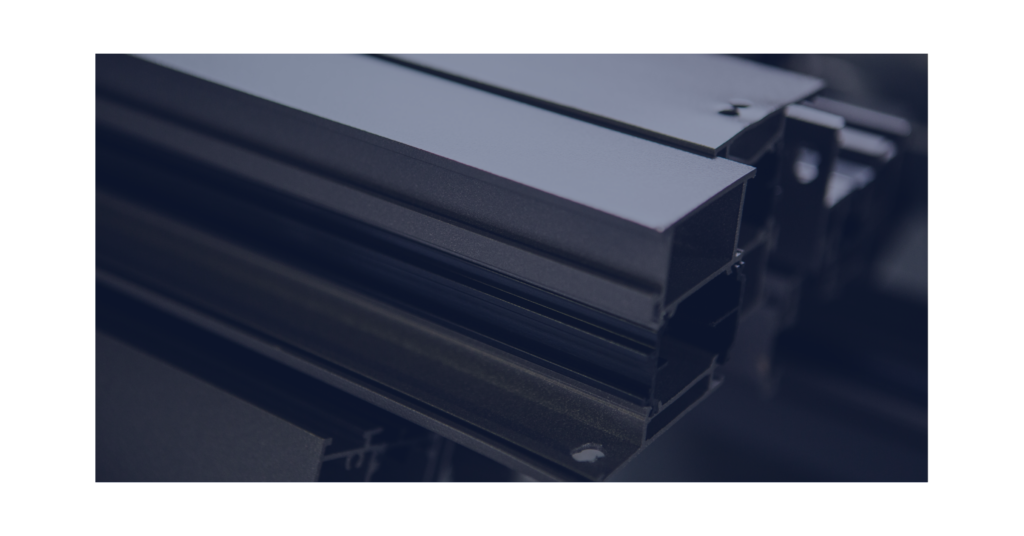
Surface treatment in aluminium has moved far beyond basic protection, evolving into a critical factor that defines performance, longevity, and visual appeal. Industries that depend on consistent material behavior increasingly rely on engineered finishes to achieve both structural integrity and controlled aesthetics. Among these, anodising continues to stand out as a process that transforms aluminium into a more durable and versatile material.
Within this landscape, black anodised aluminium has emerged as a preferred choice for applications requiring a balance of corrosion resistance, uniform appearance, and surface hardness. Its adoption across architectural, industrial, and fabrication-driven environments reflects a shift toward materials that perform reliably under stress while maintaining a refined finish.
Understanding the Fundamentals of Anodising in Aluminium
Anodising is an electrochemical process that thickens the natural oxide layer present on aluminium surfaces. This layer enhances resistance to corrosion, wear, and environmental exposure, while also providing a stable base for coloration and finishing. Unlike coatings that sit on top, anodising integrates with the material itself.
As a result, the treated surface does not peel or flake under typical usage conditions. The oxide layer becomes part of the aluminium, ensuring long-term consistency. This characteristic makes anodised aluminium suitable for applications where durability is non-negotiable and surface degradation cannot be tolerated.
Material Performance Under Demanding Conditions
Industrial environments often expose materials to fluctuating temperatures, moisture, and mechanical stress. Aluminium that undergoes anodising demonstrates improved resilience in such conditions, maintaining both structural stability and surface integrity. This performance advantage becomes critical in sectors like construction, infrastructure, and engineered fabrication.
Additionally, the hardness achieved through anodising reduces susceptibility to scratches and abrasions. Components retain their appearance over time, even in high-contact environments. This makes anodised aluminium a practical choice for both functional assemblies and visible installations.
Design Versatility and Visual Consistency
Beyond performance, anodised aluminium offers a controlled and uniform finish that aligns with modern design expectations. The ability to achieve consistent coloration across batches ensures that large-scale installations maintain visual coherence. This is particularly valuable in façade systems and architectural frameworks.
The black finish, in particular, provides a refined and understated aesthetic. It integrates well with glass, steel, and composite materials commonly used in contemporary construction. The result is a material that supports both functional requirements and design intent without compromise.
Manufacturing Precision and Sectional Applications
Aluminium extrusion is central to industrial and architectural systems, and precision in sectional profiles determines overall structural efficiency. Manufacturers that specialize in extrusion processes ensure that profiles meet exact dimensional requirements while maintaining consistency across volumes.
Anodised aluminium sections are further enhanced through controlled finishing processes. Fabrication operations such as cutting, drilling, and assembly are carried out without compromising the integrity of the anodised layer. This ensures that profiles remain functional, accurate, and visually consistent after processing.
Extrusion Accuracy and Structural Integrity
Extruded aluminium profiles are designed to maintain shape and strength across applications. High-precision extrusion ensures dimensional consistency, which is critical in modular construction and engineered assemblies.
Surface Uniformity Across Batches
Consistency across production batches is essential for projects involving large quantities of aluminium sections. Controlled anodising processes ensure that surface finish, tone, and texture remain uniform.
Compatibility with Fabrication Processes
Anodised aluminium supports machining, cutting, and assembly processes without degradation of surface quality. Fabricators can work with the material efficiently while preserving its finish.
Enhanced Edge Protection
Edges and corners are often the most exposed parts of aluminium components. Anodising extends protection to these areas, reducing the risk of corrosion and wear.
Applications Across Architectural and Industrial Sectors
The versatility of anodised aluminium enables its use across a wide range of industries. From building systems to engineered components, the material adapts to diverse functional requirements. Its performance characteristics make it suitable for both load-bearing and non-structural applications.
Industrial applications include electrical enclosures, transportation components, and fabrication-driven assemblies. In architectural contexts, aluminium profiles are widely used in window systems, curtain walls, partitions, and structural frameworks.
Key Application Areas
- Architectural systems
Used in façades, windows, doors, and structural frameworks where durability and finish are equally important. - Industrial fabrication
Applied in machinery components, equipment frames, and engineered assemblies that require strength and precision. - Electrical and infrastructure use
Suitable for enclosures and systems that demand corrosion resistance and stable performance under varying conditions.
Quality Standards and Process Control
Consistency in anodising requires strict adherence to process parameters and manufacturing discipline. Factors such as electrolyte composition, temperature, and current density must be controlled precisely to achieve the desired finish. Established manufacturers operate integrated facilities to ensure these variables remain stable.
Process Monitoring and Stability
Advanced monitoring systems maintain process consistency throughout anodising operations. These systems track key variables to ensure uniform outcomes across production runs.
Inspection and Testing Protocols
Testing procedures evaluate anodised surfaces for resistance to corrosion, abrasion, and environmental exposure. These tests confirm that the material performs as intended in real-world conditions.
Compliance with Industry Requirements
Manufacturers align production with recognized standards to ensure reliability and compatibility across applications. Compliance supports performance, safety, and long-term usability.
Advancing Material Efficiency Through Surface Engineering
Surface engineering enhances aluminium’s inherent properties, enabling it to perform in demanding environments without additional treatments. Anodising strengthens the surface while maintaining the material’s lightweight characteristics, which supports efficiency in both design and application.
From a lifecycle perspective, anodised aluminium reduces maintenance requirements and extends service life. This contributes to cost efficiency and supports sustainable material usage in large-scale projects.
In mid-scale fabrication and architectural systems, black anodised aluminium continues to support both structural requirements and visual expectations. Its integration into modern applications reflects a broader shift toward materials that combine engineered performance with controlled aesthetics.
Final Thoughts
What defines a material partner that consistently delivers both scale and precision? The answer lies in manufacturing capability, process control, and the ability to meet evolving industry demands without compromising on quality.JM Aluminium, recognized as Western India’s largest aluminium extrusion company, brings together advanced extrusion infrastructure and finishing expertise to deliver reliable solutions for industrial and architectural applications. With a strong focus on consistency, quality assurance, and engineered output, the company supports projects requiring high-performance anodised aluminium sections that meet both structural and aesthetic expectations.