

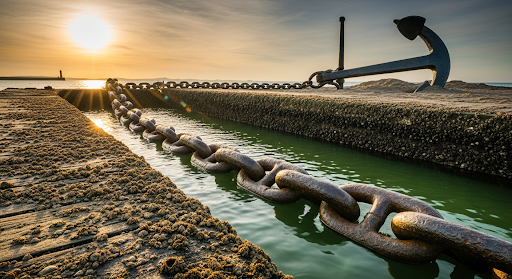
When it comes to keeping a vessel secure at sea or in port, there’s one unsung hero that rarely gets the spotlight it deserves: the ship anchor chain. This heavy-duty chain is fundamental to maritime safety, connecting the anchor to the vessel and transferring the immense forces of ocean currents, wind, and waves. In this guide, we will break down what an anchor chain is, how it’s constructed, and why certain types, like the stud link anchor chain, are essential for commercial shipping and offshore operations.
What Is a Ship Anchor Chain?
A ship anchor chain is a length of heavy metal links designed to connect a ship’s anchor to the vessel itself. More than just a rope or cable, this chain must withstand extreme loads, resist corrosion, and work effectively in some of the harshest environments on Earth: saltwater, strong currents, and relentless motion. Anchor chains absorb shocks and help keep the ship from drifting, playing a critical role in vessel stability and safety. When the anchor digs into the seabed, the chain helps manage the forces and friction that hold the ship in place.
Today’s anchor chains are manufactured to strict international marine standards to ensure they meet the safety and performance needs of commercial and large vessels.
Anatomy of a Ship Anchor Chain
At first glance, a ship anchor chain may look like a simple series of metal loops. But there’s more to it than meets the eye. Key aspects of anchor chain structure include:
Chain Links
Each individual link in the ship anchor chain is shaped and sized according to rigorous specifications. The links are made of high-strength metals such as carbon steel or specialized anchor steel grades that can handle dynamic loads. Although the basic loop shape might seem straightforward, each link is engineered for optimal strength and flexibility.
Studs
In many anchor chains, particularly stud link anchor chain types, there’s an added metal stud that runs through the center of each link. This isn’t a decorative feature; it serves several critical purposes:
- It increases the rigidity and strength of the chain, helping it carry heavy loads without deforming.
- It improves resistance to twisting and kinking under tension.
- It adds weight and stability, which helps the chain sink properly through the water and lay correctly on the seabed.
Grades and Materials
Anchor chains are produced in different grades, such as Grade 2 and Grade 3, which reflect different mechanical properties and levels of heat treatment during manufacturing. Higher grades typically have greater tensile strength and toughness, making them suitable for larger ships and more demanding marine environments.
Stud Link Anchor Chain: Why It Matters
Among the different types of anchor chains, the stud link anchor chain is a dominant choice for commercial shipping, offshore platforms, and large vessels. But what makes it so widely used?
Enhanced Strength
The inclusion of the central stud increases each link’s resistance to deformation. This means the anchor chain can take on stronger forces when the vessel is at anchor in rough seas or heavy currents.
Better Fatigue Resistance
Fatigue resistance refers to how well the chain can withstand repeated loading and unloading cycles without cracking. Stud link chains are superior here because the stud provides internal support, reducing stress concentrations in the metal.
Improved Weight Distribution
The stud also helps distribute the weight of the chain more evenly. This added weight helps the chain keep tension from the anchor to the seabed, improving holding power and stability.
Because of these advantages, the stud link anchor chain is often specified for commercial ships. It bridges the gap between design, practical function, and safety standards in the marine industry.
How Anchor Chains Are Tested and Classified
To ensure safety and reliability, ship anchor chains must meet stringent classification rules from international marine organizations. These standards define how chains are tested, what materials are acceptable, and how links must be manufactured. Typical tests include proof load tests (to check strength under sustained force) and break load tests (to determine the maximum load before failure).
Many anchor chains are also certified by classification societies that enforce safety in ship design and operation. These certifications give shipbuilders and operators confidence that the chain will perform to expectation under real-world conditions.
Function of Anchor Chain in Ship Operations
The primary role of the ship anchor chain is to secure the vessel in place. However, its function extends beyond simply connecting the anchor to the hull.
Shock Absorption and Dynamic Loads
Anchor chains absorb dynamic loads caused by waves, wind, and tide changes. If a boat were held solely by the anchor without a chain, the shocks from ocean movement could damage the vessel or cause it to drift.
Maintaining Position
The weight and length of the ship anchor chain allow for “scope,” which is the ratio of chain length to the depth of the water. A longer scope increases the horizontal pull on the anchor, improving holding power.
Deployment and Retrieval
Anchor chains are deployed and retrieved using a winching mechanism called a windlass. Smooth link structure and correct dimensions ensure the chain feeds over the windlass smoothly, without catching or jamming.
Proper Maintenance and Inspection
Like all essential ship equipment, anchor chains require regular inspection and maintenance. Over time, exposure to seawater can cause corrosion or wear, especially on chains used frequently in harsh environments. Ship crews or marine service teams visually inspect links for wear, cracks, or deformities. If any link shows significant damage, it must be replaced promptly to maintain safety.
Proper lubrication and rust prevention coatings also help extend the life of the chain. When the chain is not in use, storing it correctly and preventing unnecessary exposure to corrosive elements will improve its longevity.
Conclusion
Understanding the structure, strength, and function of a ship’s anchor chain reveals its vital role in maritime safety. This essential component secures vessels against waves and currents. The stud link anchor chain remains widely preferred for its superior strength, stability, and reliability under heavy loads, ensuring safe anchoring and dependable performance in demanding marine conditions.
Wismar Heavy Equipment TRD LLC is a leading marine supplier with over four decades of experience serving the UAE and the Gulf region’s shipping industry. They provide a comprehensive range of marine equipment, including ship anchors, chains, shackles, and more, alongside expert advice and support for both new and second-hand heavy marine gear