

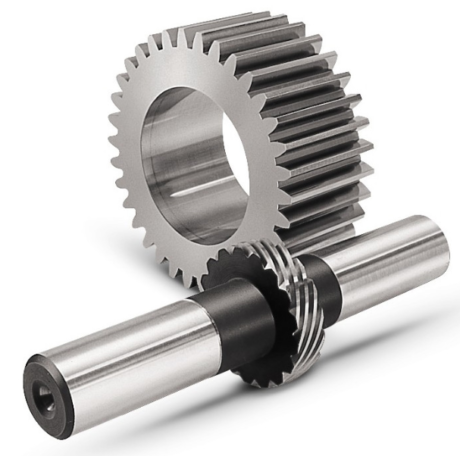
Precision gears cannot be produced by machining alone; they must also be measured and verified against a reliable reference. This reference is provided by master gears—highly accurate gears used to inspect working gears for composite errors, tooth contact, and running behavior. Among them, the helical master gear plays a vital role in checking helical gears that dominate modern transmissions.
Without dependable master gears, even the most advanced hobbing or shaping process cannot guarantee consistent quality. They are the benchmark that defines whether a gear is truly fit for service.
What Are Master Gears?
Master gears are precision-ground gears manufactured to extremely tight tolerances. Instead of being used in power transmission, they serve as inspection tools on gear rolling testers and double-flank checking machines. By meshing a production gear with a master gear, manufacturers can evaluate:
- Total composite error
- Tooth-to-tooth variation
- Runout and eccentricity
- Contact pattern
- Noise-related defects
Because every measurement depends on the accuracy of the master, these gears are produced to much higher standards than normal working gears.
Importance of Helical Master Gear
Most modern gearboxes use helical gears due to their smooth and quiet operation. To inspect such components correctly, a dedicated helical master gear with matching module, pressure angle, and helix angle is required. Straight master gears cannot evaluate the lead and helix characteristics of helical parts.
A helical master gear allows quality engineers to:
- Verify helix angle accuracy
- Detect lead deviations
- Assess flank contact under real meshing conditions
- Predict gearbox noise behavior
For industries like automotive and electric vehicles, this inspection is critical to meeting NVH (noise, vibration, harshness) requirements.
How Master Gears Are Manufactured
Producing master gears demands specialized capability far beyond standard gear cutting. The process typically includes:
- Use of premium alloy steel with excellent stability
- Precision hobbing or shaping as a pre-process
- Finish grinding on high-accuracy CNC gear grinders
- Lapping or honing for superior surface finish
- 100% inspection on analytical gear measuring systems
Only manufacturers with advanced infrastructure, such as those highlighted on sstools.net/master-gears/, can achieve the necessary DIN/AGMA quality levels.
Types of Master Gears
Depending on the inspection need, several variants are used:
- Spur master gears – for checking straight tooth gears
- Helical master gears – for helical gear inspection
- Master worms and worm wheels – for worm gear sets
- Spline master gears – for involute splines
- Custom masters – for special profiles
Each type must exactly match the geometry of the production gear to provide meaningful results.
Benefits of Using High-Quality Master Gears
Investing in accurate masters brings multiple advantages:
- Reliable acceptance of production gears
- Early detection of process problems
- Reduction of gearbox noise issues
- Faster setup of hobbing and shaping machines
- Traceability in quality audits
In many plants, master gears are considered the ultimate authority for pass/fail decisions.
Application Areas
Master gears and helical master gears are indispensable in:
- Automotive transmission plants
- EV reduction gear production
- Industrial gearbox manufacturing
- Aerospace actuation systems
- Agricultural machinery
- Gear tool development
Any facility that produces gears in volume requires a set of masters for every critical specification.
Selecting the Right Master Gear
Choosing a master involves careful consideration of:
- Module or DP
- Pressure angle
- Helix angle and hand
- Number of teeth
- Quality class required
- Material and hardness
Working with an experienced supplier ensures that the master gear truly represents the design intent of the working gear.
Care and Handling
Because masters are reference instruments, they must be treated with special care:
- Store in protective cases
- Avoid using them for power transmission
- Clean after every inspection cycle
- Calibrate periodically
- Handle with gloves to prevent corrosion
Proper maintenance preserves their accuracy for many years.
Helical Master Gear in Noise Control
Gear noise is one of the biggest challenges in modern vehicles. A helical master gear helps engineers simulate real meshing conditions during inspection. By analyzing composite errors against the master, manufacturers can adjust:
- Profile crowning
- Lead corrections
- Tooth modifications
This proactive approach prevents costly noise issues after assembly.
Partnering with Expert Manufacturers
Not every tooling company can produce true master gears. A competent partner should provide:
- Certified accuracy reports
- Capability for both spur and helical masters
- Custom design support
- Recalibration services
- Short lead times
The resources shown on sstools.net/master-gears/ demonstrate how specialized manufacturers support gear producers from prototype to mass production.
Future of Gear Inspection
As gearboxes become quieter and more efficient, the role of master gears will grow further. Digital inspection systems still rely on physical masters for correlation. Advanced materials and ultra-fine grinding are enabling even higher accuracy levels, especially for EV applications.
Conclusion
Master gears are the cornerstone of reliable gear quality control, and the helical master gear is indispensable for today’s helical transmissions. They provide the reference against which every production gear is judged, ensuring smooth operation, low noise, and long service life.
By sourcing master gears from experienced specialists like those featured on sstools.net/master-gears/, manufacturers gain confidence in their inspection process and protect the reputation of their gear products in demanding global markets.